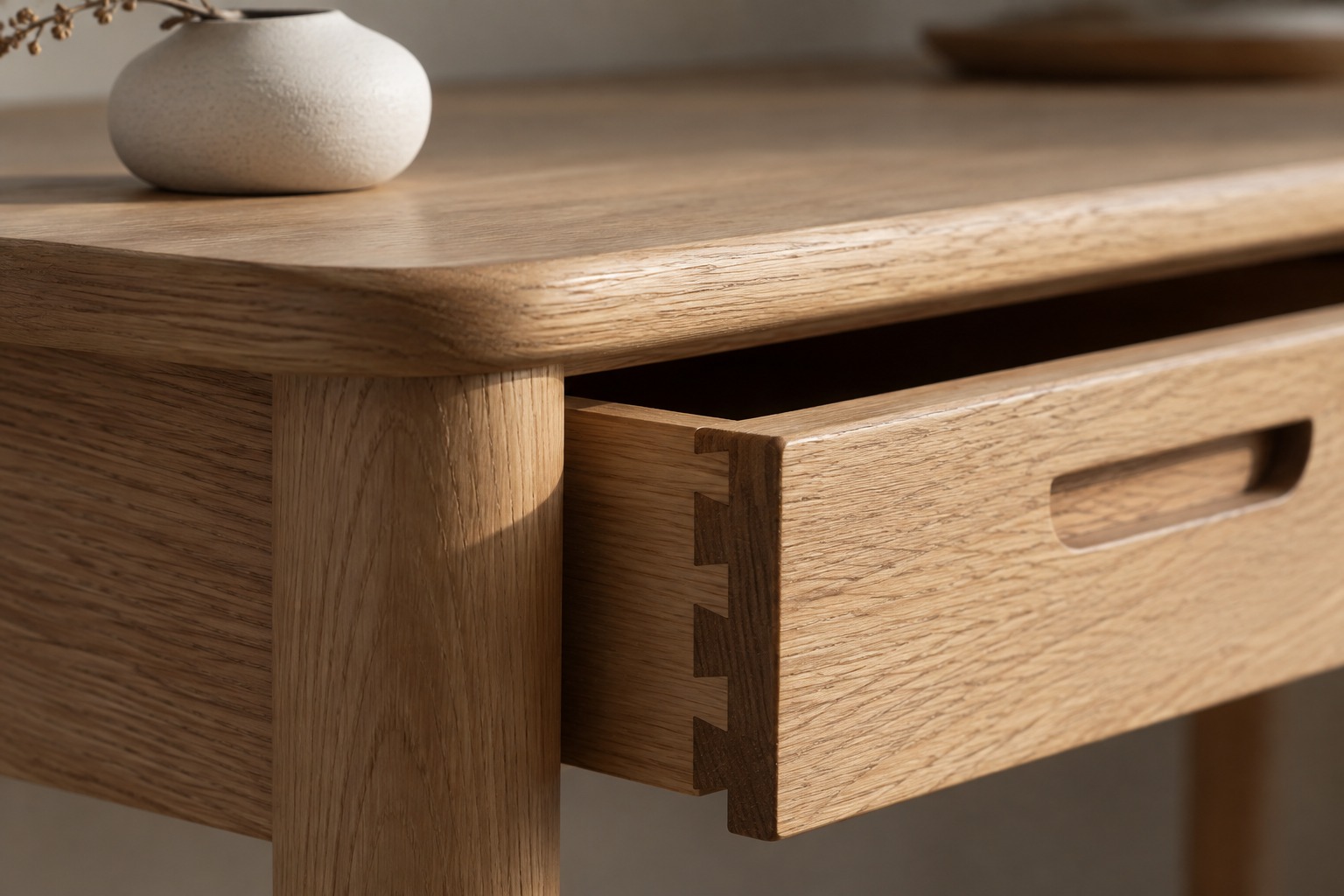
01
Begin with proportion
A side table should meet the life around it: the reach from a chair, the height beside a bed and the clear space needed to move. Start with the room, then choose the form.
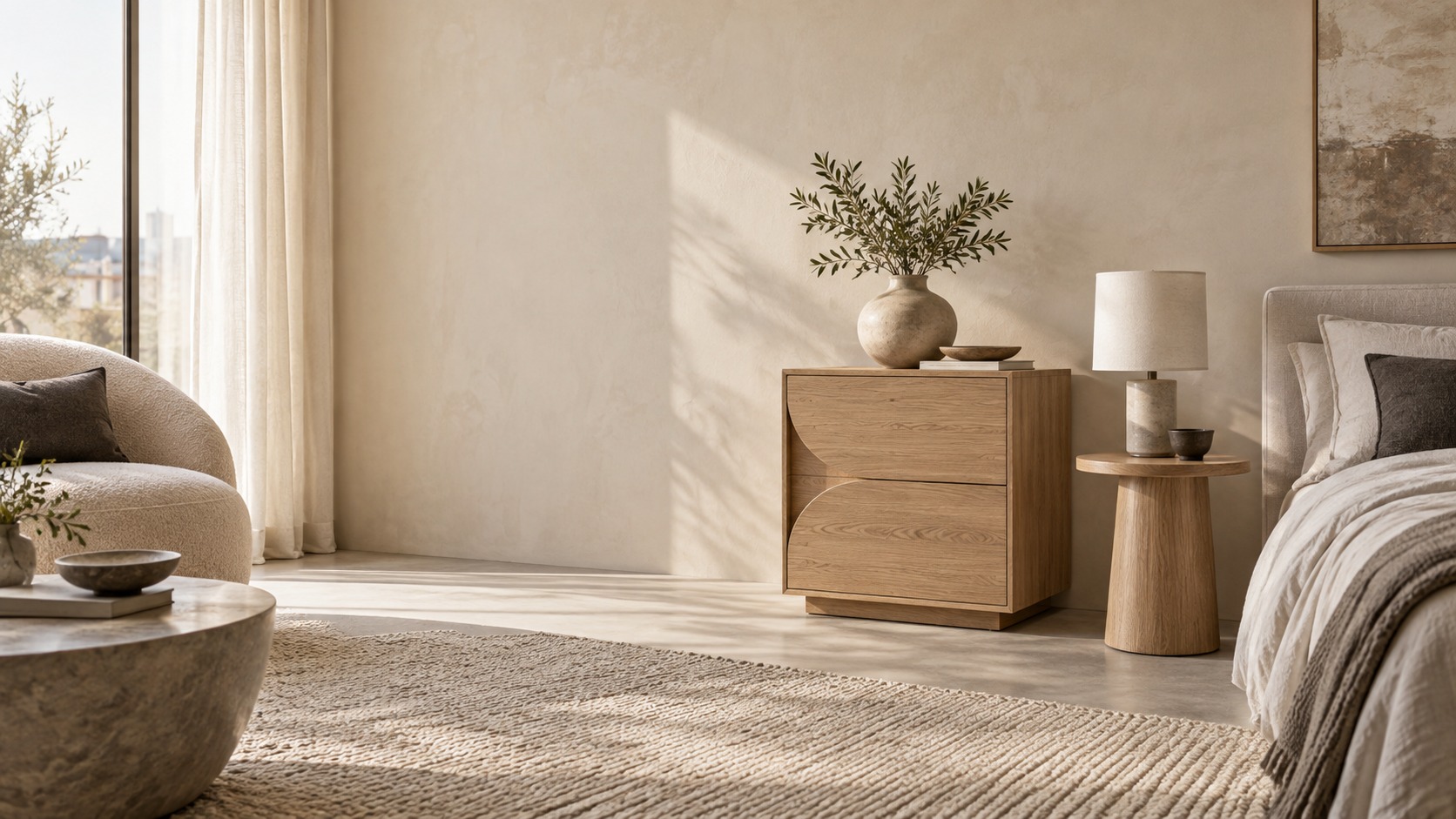
Tables and bedside pieces shape the pauses in a room. Discover how scale, material and storage can make everyday spaces feel calmer and more useful.
Explore the guideA side table should meet the life around it: the reach from a chair, the height beside a bed and the clear space needed to move. Start with the room, then choose the form.
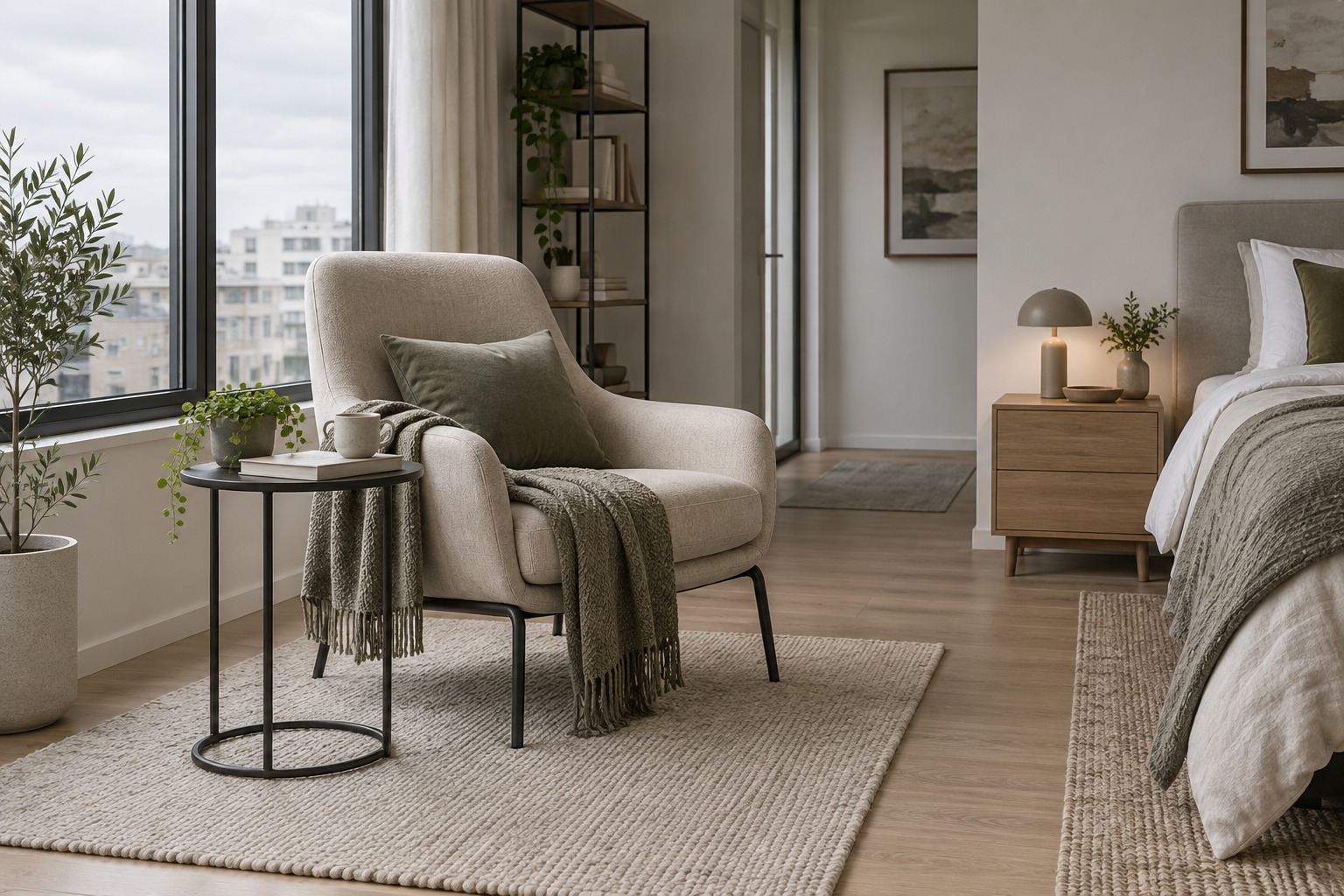
Grain direction, edge shape and surface finish change how furniture catches light and ages visually. Warm woods soften a room; darker tones create an anchor; pale stone adds quiet contrast.
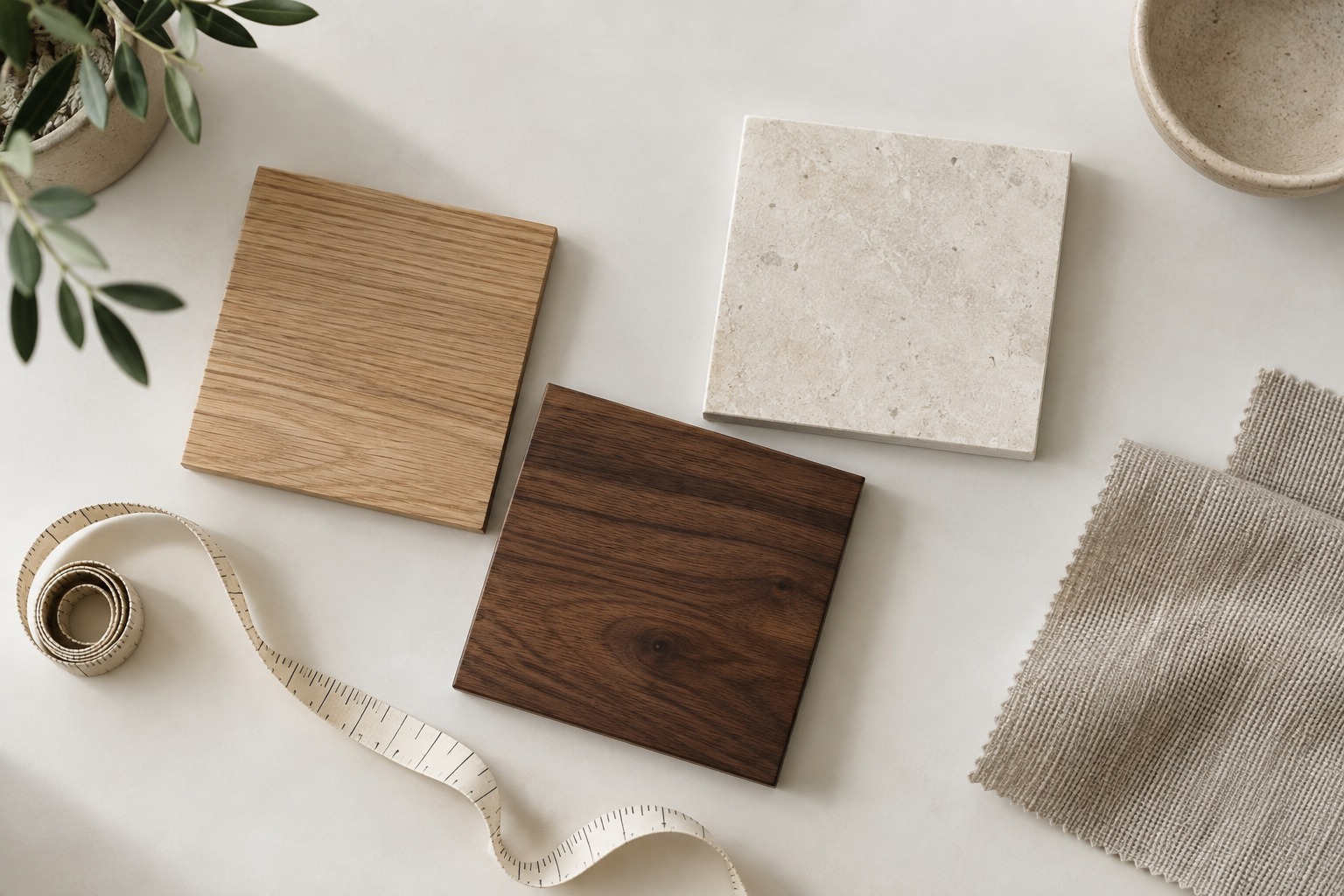
Keep the top surface purposeful and the floor plan breathable. A compact table can hold a lamp and daily essentials without becoming a visual obstacle.
A top close to the mattress surface is often easiest to reach, but your bed frame and preferred use should guide the final measurement.
Record overall width, depth, nearby door or drawer swing and the walking path beside the piece.
View undertone, grain contrast and sheen in the room's typical daylight and evening lighting.